I love Brussels Sprouts and now that they are fresh locally, I'll be eating a lot of them. I also try to cook simply and use the least amount of dishes and pots and pans as possible. Tonight my daughter requested baked tofu (recipe courtesy of Moosewood Restaurant slightly modified by me). Perfect! The Brussels sprouts would cook perfectly with the tofu and it's baking sauce. I forgot to take a photo, so will have to do it next time I make this dish.
Serves 4.
1 lb. extra firm sprouted organic tofu (or any firm or extra firm tofu of your choice), drained.
1 lb. or so small Brussels Sprouts, stems trimmed and cut in half
3 tablespoons Tamari or soy sauce of choice
2 tablespoons water
2 tablespoons sesame oil, dark sesame oil, or olive oil
2 teaspoons tomato paste
3 teaspoons seasoned rice vinegar (or 2 teaspoons rice vinegar plus 2 teaspoons honey or sugar)
Preheat oven to 375 degrees.
Cut tofu into 8 slices.
Combine tamari, water, oil, tomato paste and rice vinegar in a measuring cup.
Lightly oil the bottom of a large glass baking dish (9 x 13 or so)
Place tofu in dish and arrange sprouts around the tofu.
Pour sauce over the tofu and sprouts.
Bake uncovered for 15 minutes. Remove from oven, turn tofu and shake dish to distribute sauce.
Return to oven and bake 10 more minutes; remove, turn.
Return to oven and bake until sauce has mostly evaporated and tofu and sprouts are browned.
We like steamed rice or buckwheat noodles with this dish.
Tuesday, October 4, 2016

Tuesday, September 27, 2016
Vegan or Not Broccoli Soup
Autumn is in the air. Even though the trees aren't turning their gorgeous colors yet, the nights are cool and the air smells of fall. It was a gorgeous day here in the Berkshires and I went out for a late afternoon hike to clear my head and get the blood pumping. My borrowed dog, Ginger, waited all day for me to get my act together and take her out for a hike. She's such an awesome companion!

Cooler weather means warmer foods. I love soups in the fall and winter. Cheap and easy to make, especially when you need to clean the refrigerator out of the week's leftovers or use up miscellaneous veggies in the crisper. I usually make my own veggie and chicken stocks (save those celery tops, onion peels, mushroom stems, herb stems, beef & chicken bones, etc.)
Broccoli soup is one of my favorites (and so nutritious - more about that below); wish my teenage daughter would eat it. I keep telling her one day she'll like broccoli; I just get a scowl and "gross mom I'll never like it". This time of year broccoli is available at the local farm markets (and usually quite inexpensive; organic preferred). No cream needed in this soup! I prefer this dairy free version; creamy due to the addition of oatmeal. There are various options for stock and herbs; so, adjust according to your tastes.

I am not vegan, so I use what I have on hand which sometimes includes chicken stock and/or butter/ghee.
1 tablespoon olive oil or other vegetable oil (butter/ghee works too)
1 large onion, chopped (about 2 cups)
1 stalk celery, diced (1/4-1/3 cup)
2 garlic cloves, chopped/sliced
1/2 tsp salt (omit if using stock with salt added)
2 large broccoli stalks (yes, you need the stalks; don't just buy crowns)
4 cups water, vegetable stock or chicken stock (home made or store bought low salt)
1/2 cup rolled oats (whirl in a blender about 15 seconds) or use 1/3 cup quick oats
1 tablespoon lemon juice
1 tablespoon fresh herb of choice (or 1 tsp dried) such as dill or thyme or oregano.
black pepper (optional)
In a soup pot warm oil over medium heat and add onion, celery, garlic, and salt (if using). Partially cover and let cook about 10 minutes stirring occasionally.
Wash broccoli and cut crowns into florets (you should have 4-5 cups). Reserve 1-2 cups florets.
Peel stems to get at the tender part of the stalk and chop (about 2 cups).
Add broccoli (except reserved florets), herbs, and water/stock to pot. (Do not be tempted to add more liquid; the water/stock will just cover the vegetables. Too much water will make the soup too thin; you can always add more later if you like a thinner soup).
Cover and bring to a gentle boil; lower heat and simmer about 5 minutes. Add oats, cover and simmer about 10 minutes (stir occasionally) until vegetables are tender and soup thickens. Don't worry if oatmeal clumps.
In a glass measuring cup, add reserved florets and cover with water. Microwave on high a few minutes until crisp tender and bright green; drain. Or, cook in small pot or steamer on the stove.
Remove from heat and add lemon juice and black pepper. Puree soup with an immersion blender (or let soup cool and whirl in a blender/food processor in batches) until smooth.
If eating immediately, add florets. If not eating immediately, let soup cool completely before adding florets and refrigerating.
Enjoy!
Nutrition Info:
Broccoli, a cruciferous vegetable, is one of the healthiest veggies you can eat (along with other greenies such as kale, collards, swiss chard, bok choy). What does it do?
- can help lower cholesterol (steamed/cooked is best)
- supports detoxification (helps get rid of toxins in the body)
- 1 cup supplies 250% RDA of Vitamin K and along with Vitamin A helps rebuild Vitamin D stores. (As a New Englander, I take a Vitamin D supplement Fall-Spring).
- has anti-inflammatory benefits
- can help people suffering from allergies
- provides many vitamins (C, B6, E, B1, B2) and minerals (chromium, phosphorus, zinc, iron, and many more).
Monday, August 8, 2016
EcoM8s: Clams and Vitamin B12 for Brain Health
EcoM8s: Clams and Vitamin B12 for Brain Health: I really enjoy seafood, all kinds of fish, shellfish, and bivalves. I'm careful to purchase seafood that is sustainable, pole caught or ...
Clams and Vitamin B12 for Brain Health
I really enjoy seafood, all kinds of fish, shellfish, and bivalves. I'm careful to purchase seafood that is sustainable, pole caught or caught/fished in an environmentally friendly manner. The Monterey Bay Aquarium seafood watch app is my go to guide when I'm at the fish market purchasing my seafood.
There are all kinds of health benefits from eating seafood. Clams (along with mussels, sardines, crab, trout, and wild salmon) are high in Vitamin B12, an essential vitamin for brain health and healthy nerve cells. B12 is also absorbed and concentrated in animals (beef liver is an excellent source). If you are vegan or vegetarian it is important to take a B12 supplement. (FYI, the body can store B12 and you could go a couple years without supplementation before you start to notice symptoms of deficiency. Click here for more info for vegan and vegetarians. This article from the University of Maryland Medical Center describes symptoms of deficiency, food sources of B12, and supplementation information. It is important to talk to your regular physician, a doctor of Naturopathy, or dietician expert about supplementation; do not try and supplement on your own.
One of my favorite ways to get Vitamin B12 is by eating clams. Here is my go to recipe:

Clams Steamed in White Wine with Garlic and Shallots
Serves 2-3 as main meal
There are all kinds of health benefits from eating seafood. Clams (along with mussels, sardines, crab, trout, and wild salmon) are high in Vitamin B12, an essential vitamin for brain health and healthy nerve cells. B12 is also absorbed and concentrated in animals (beef liver is an excellent source). If you are vegan or vegetarian it is important to take a B12 supplement. (FYI, the body can store B12 and you could go a couple years without supplementation before you start to notice symptoms of deficiency. Click here for more info for vegan and vegetarians. This article from the University of Maryland Medical Center describes symptoms of deficiency, food sources of B12, and supplementation information. It is important to talk to your regular physician, a doctor of Naturopathy, or dietician expert about supplementation; do not try and supplement on your own.
One of my favorite ways to get Vitamin B12 is by eating clams. Here is my go to recipe:

Clams Steamed in White Wine with Garlic and Shallots
Serves 2-3 as main meal
3 pounds clams (if
collected in the wild they need to be purged/cleaned and degritted -click here for more info).
2 small shallots,
chopped
4-6 cloves garlic,
minced
2 tablespoons butter
2 tablespoons olive
oil
1 cup dry white wine
(Sauvignon Blanc is good; California style with lemon and citrus notes works
well)
Chopped fresh
parsley
Fresh crusty bread
If you purchased your clams from a seafood market, chances are the distributor has already purged the clams and they are ready for cooking. I buy and cook my shellfish on the same day so I don't have to worry about keeping them alive for very long. For info about storing click here.
Rinse clams under cold water and place in a colander.
Heat olive oil over
medium heat and sauté shallots and garlic about a minute.
Pour in white wine.
Boil until you have half of the volume, about 1/2 cup.
Add clams, cover and
steam and until they start to open, about 5 minutes or so.
Add butter, cover,
and cook until most or all of the clams open (another minute or so). Discard any that do not open.
Sprinkle with
parsley.
Our family tends to just pull from the pot on the table (so they and the broth stay nice and hot).
I serve mine with warm crusty bread, a green salad/Caesar salad, and fresh
corn on the cob. It is summer after all!
Thursday, August 4, 2016
Poaching Chicken
Eating nutritious foods along with regular exercise are the keys to staying healthy, happy, and feeling good about yourself. Science has proven over and over that if you feed your brain and body nutritious foods, the happier and healthier your life. My favorite recent books with the most recent science include The Happiness Diet and Eat Complete, both by Drew Ramsey, MD. I highly recommend these books - great information, humorous, and some excellent recipes too.
Chicken is one of my go-to proteins; easy to prepare and my family will eat it a variety of ways. For families on the go, it's easy to prepare poached chicken to store in the refrigerator to add to salads, quesadillas, stir fried rice, pasta, or whatever else you can conjure up. I buy organic or locally raised free range chicken. It costs a little more, but, I have a problem with conventional methods of raising chickens (inhumane in my opinion) and believe the stress that the animals go through finds its way into the meat and into me; no thank you. There is enough stress in life; I don't need to eat animals that were stressed out.
For those of you that say it takes time to prep food; yes, it does. But, you can prepare poached chicken while watching the evening news, a TED talk, while you watch over your kids doing homework, or while you get in a 30 minute exercise routine from the web or CD (I love Beachbody programs). I'm poaching a batch right now at 9pm.
So, here it is. My easy, tasty poached chicken breast recipe. The broth gets saved and frozen to use again for poaching and/or for a soup base.
2 whole chicken breasts, bone-in, skin-on
Water (or if you have some leftover chicken stock, use it) to cover the chicken by about an inch
1/4 cup white wine or vermouth
3-4 sprigs flat leaf parsley
1 onion, sliced
3-4 celery tops (the small stalk with leaves)
1 clove garlic, smashed
dash of salt and pepper
Place chicken breasts in a large saucepan or small stockpot.
Add stock or cool water to cover by an inch.
Add in wine/vermouth, parsley, onion, celery, garlic, salt, pepper.
Bring to a boil.
Turn off heat, cover pot, and leave on burner for 30 minutes (longer if breasts are very large).
Use a meat thermometer in thickest part of breasts; should read 160 degrees.

Remove from pot and let cool slightly. It's easiest to remove skin and meat from bones while still warm.

Remove skin and pull meat from bones. Remove any extra fat and chop into large pieces.

Strain stock and compost solids.
Stock will keep in the refrigerator for 2 days or freeze for up to 3 months. Reusing this stock several times for poaching will give you a delicious rich chicken stock to use in the fall/winter months as a soup base.
Note: To poach a whole chicken, follow recipe but when water reaches boiling, turn to low and let simmer 10 minutes before turning off flame. Let sit 25-30 minutes and check with meat thermometer.
One final note: Be mindful of how much you are eating. Most people eat too much protein at one sitting. Two large chicken breasts (mine for this post were 2 1/4 pounds) yield about 4 cup of cut up chicken. A serving size is 1/2 cup. So, this recipe can serve about 8. It cost me $13 for two organic chicken breasts which ends up being $1.60 per serving.
And, a few scraps for my neighbor's dog, Ginger. :)

Chicken is one of my go-to proteins; easy to prepare and my family will eat it a variety of ways. For families on the go, it's easy to prepare poached chicken to store in the refrigerator to add to salads, quesadillas, stir fried rice, pasta, or whatever else you can conjure up. I buy organic or locally raised free range chicken. It costs a little more, but, I have a problem with conventional methods of raising chickens (inhumane in my opinion) and believe the stress that the animals go through finds its way into the meat and into me; no thank you. There is enough stress in life; I don't need to eat animals that were stressed out.
For those of you that say it takes time to prep food; yes, it does. But, you can prepare poached chicken while watching the evening news, a TED talk, while you watch over your kids doing homework, or while you get in a 30 minute exercise routine from the web or CD (I love Beachbody programs). I'm poaching a batch right now at 9pm.
So, here it is. My easy, tasty poached chicken breast recipe. The broth gets saved and frozen to use again for poaching and/or for a soup base.
2 whole chicken breasts, bone-in, skin-on
Water (or if you have some leftover chicken stock, use it) to cover the chicken by about an inch
1/4 cup white wine or vermouth
3-4 sprigs flat leaf parsley
1 onion, sliced
3-4 celery tops (the small stalk with leaves)
1 clove garlic, smashed
dash of salt and pepper
Place chicken breasts in a large saucepan or small stockpot.
Add stock or cool water to cover by an inch.
Add in wine/vermouth, parsley, onion, celery, garlic, salt, pepper.
Bring to a boil.
Turn off heat, cover pot, and leave on burner for 30 minutes (longer if breasts are very large).
Use a meat thermometer in thickest part of breasts; should read 160 degrees.

Remove from pot and let cool slightly. It's easiest to remove skin and meat from bones while still warm.

Remove skin and pull meat from bones. Remove any extra fat and chop into large pieces.

Strain stock and compost solids.
Stock will keep in the refrigerator for 2 days or freeze for up to 3 months. Reusing this stock several times for poaching will give you a delicious rich chicken stock to use in the fall/winter months as a soup base.
Note: To poach a whole chicken, follow recipe but when water reaches boiling, turn to low and let simmer 10 minutes before turning off flame. Let sit 25-30 minutes and check with meat thermometer.
One final note: Be mindful of how much you are eating. Most people eat too much protein at one sitting. Two large chicken breasts (mine for this post were 2 1/4 pounds) yield about 4 cup of cut up chicken. A serving size is 1/2 cup. So, this recipe can serve about 8. It cost me $13 for two organic chicken breasts which ends up being $1.60 per serving.
And, a few scraps for my neighbor's dog, Ginger. :)

Sunday, June 12, 2016
Purslane - Weed It or Eat It?
For years I would "weed it." Until, I found out that you could "eat it." And, that its nutritional benefits are extensive. I had forgotten about it this year since we moved from the country and into town (although still a New England country town); it doesn't grow in my yard, yet. I stopped by a local farm today to pick up some asparagus and strawberries, and there it was! Freshly wild gathered.

Benefits:
Chocolate and Zucchini
Mother Earth News
Edible Wild Food

Benefits:
- Full of minerals: calcium, iron, magnesium, and potassium - most American's eating a MAD diet (Modern American Diet of processed and fast foods) are deficient in these important minerals
- One of the few plants offering a high amount of omega-3 fatty acid in ALA form (other forms DHA and EPA are obtained from seafood). Omega-3 fats are not produced in the body and you must get them from food. They play important roles in brain health and are the building blocks of cell membranes.
- High in Vitamin E (provides 6 times more than spinach)
- Rich in vitamins A, B, and C.
- raw in salads
- lightly steamed
- lightly sauteed with a little olive oil, garlic and salt
Chocolate and Zucchini
Mother Earth News
Edible Wild Food
Thursday, June 9, 2016
Seafood and Kale...Its what's for dinner!
Seafood...its what's for dinner! Mussels are a great value ($3.99/lb; 1 lb per person for a main meal is plenty) and nutritious, especially for feeding the brain with Vitamin B12, DHA and EPA (Omega-3 Fats), Selenium, Vitamin C and protein.
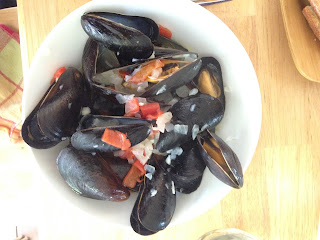
A healthy brain needs Omega-3 Fats found in seafood. Some Omega 3's (ALA) are found in greens, flax seeds, and chia seeds but the benefits from the type in seafood are better absorbed by the body and greater than plant-based to prevent depression, dementia, and heart disease.
Vitamin B12 is found only in animals and seafood; and is a common deficiency in those that are vegan or vegetarian. Low levels of B12 can cause irreversible brain damage and deficiencies cause depression and anemia.
Selenium is a powerful antioxidant and is needed for metabolism and thyroid function.
Check out Drew Ramsey's book Eat Complete for detailed information about these vitamins and for the mussels recipe.

Kale! I love kale! I eat it sauteed, raw, grilled, and crispy from the oven. Kale, a cruciferous veggie is full of nutritional benefits. And, spring kale from a local organic farm is sweet and tender. Kale contains a large dose of Vitamin K, Vitamin C and Vitamin A and many trace minerals. Kale supports brain and bone health, cardiac health, and supports the immune system.
Here's my kale Caesar salad recipe:

1 bunch kale, washed and leaves pulled from stems and torn
1 head of romaine, washed and leaves torn
Dressing:
4-6 anchovies
4 cloves garlic
1 tsp. dry mustard
1 tablespoon Worcestershire sauce
3 tablespoons lemon juice
3 tablespoons plain yogurt
1/2 cup olive oil
Parmesan cheese
Blend first 6 ingredients in a jar using an immersion blender (or small food processor) until garlic and anchovies blended. Add in olive oil and blend.
Mix dressing (not all will be needed) and greens and add Parmesan cheese.

A healthy brain needs Omega-3 Fats found in seafood. Some Omega 3's (ALA) are found in greens, flax seeds, and chia seeds but the benefits from the type in seafood are better absorbed by the body and greater than plant-based to prevent depression, dementia, and heart disease.
Vitamin B12 is found only in animals and seafood; and is a common deficiency in those that are vegan or vegetarian. Low levels of B12 can cause irreversible brain damage and deficiencies cause depression and anemia.
Selenium is a powerful antioxidant and is needed for metabolism and thyroid function.
Check out Drew Ramsey's book Eat Complete for detailed information about these vitamins and for the mussels recipe.

Kale! I love kale! I eat it sauteed, raw, grilled, and crispy from the oven. Kale, a cruciferous veggie is full of nutritional benefits. And, spring kale from a local organic farm is sweet and tender. Kale contains a large dose of Vitamin K, Vitamin C and Vitamin A and many trace minerals. Kale supports brain and bone health, cardiac health, and supports the immune system.
Here's my kale Caesar salad recipe:

1 bunch kale, washed and leaves pulled from stems and torn
1 head of romaine, washed and leaves torn
Dressing:
4-6 anchovies
4 cloves garlic
1 tsp. dry mustard
1 tablespoon Worcestershire sauce
3 tablespoons lemon juice
3 tablespoons plain yogurt
1/2 cup olive oil
Parmesan cheese
Blend first 6 ingredients in a jar using an immersion blender (or small food processor) until garlic and anchovies blended. Add in olive oil and blend.
Mix dressing (not all will be needed) and greens and add Parmesan cheese.
Subscribe to:
Posts (Atom)